
.png)
Architecting a Global B2B CDMO Portal for Complex Small Molecules & Peptides
Domain
Bio-Pharma CDMO, Complex API & Peptide Manufacturing, B2B Enterprise Tech
Role
Lead Product Designer & UX Consultant (Full-Lifecycle Design Ownership)
Design Tools

Figma
.png)
Claude

Clevertap

Useberry
Core Impact
-
Accelerated qualified inbound scientific consultation requests by +42% via context-aware lead forms.
-
Compressed technical capability and peptide modality lookup time from 5 minutes to < 45 seconds.
-
Increased high-value "Proven in Practice" case study downloads and engagement by +55%.
-
Reduced frontend implementation friction by 40% through the Neuland Enterprise Design Tokens framework.
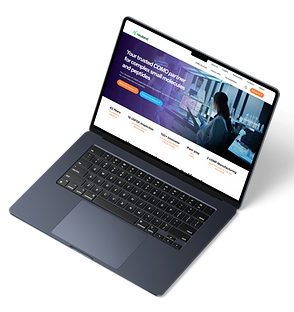.png)
Strategic Overview
Context
Neuland Laboratories is a leading global Contract Development and Manufacturing Organization (CDMO) with over 40 years of API expertise, supporting 150+ pharmaceutical clients across 30+ countries. Operating 3 cGMP manufacturing facilities and managing 18+ commercial CDMO programs, Neuland specializes in complex small molecules and advanced peptide synthesis (SPPS, LPPS, and hybrid technologies) across the full drug lifecycle—from early R&D to commercial scale-up.
The Baseline Problem
Neuland’s legacy digital platform struggled to communicate its advanced technical capabilities to global biotech R&D directors and pharma procurement heads:
-
Friction-Heavy Consultation Funnel: Scientific consultation CTAs were buried inside generic contact pages, resulting in a 60%+ drop-off rate among high-intent procurement leads.
-
Fragmented Modality Architecture: Technical specs for complex peptides (Solid-Phase vs. Liquid-Phase Synthesis) and small molecules were obscured by dense text blocks without clear lifecycle mapping.
-
Visual Inconsistency: The absence of a standardized enterprise design token system weakened Neuland’s visual authority against top-tier global CDMO competitors.
Strategic Objectives & Product Vision
Product Objectives
-
Accelerate Lead Velocity & Consultation Funnel (Lead Capture Goal): Compress technical capability discovery and scientific inquiry scheduling to under 45 seconds using inline, context-aware lead capture forms ("Start a Scientific Conversation").
-
Establish Technical Authority & De-Risking (Trust & Conversion Goal): Present synthesis modalities, regulatory compliance credentials (USFDA/cGMP), and supply chain de-risking frameworks clearly across all stages of drug development.
-
Architect a Scalable Enterprise Design System (Brand Equity Goal): Build a unified, AA/AAA WCAG-compliant design token system (Instrument Sans display, Inter body, Primary Dark Green #034632, and high-visibility Orange #FF823C CTAs) to elevate Neuland’s global market presence.
.png)
User Personas & Behavioral Psychology
Primary Personas
-
Dr. Elena, VP of Peptide Development (Client-Side R&D)
Profile: 46-year-old biopharma VP managing synthetic peptide pipelines for a mid-sized US biotech firm.
Mindset & Friction: Technical, cautious, and highly risk-averse. Anxious about yield purity, SPPS vs. LPPS scalability, and regulatory filing delays. Frustrated when CDMO websites hide technical specs behind mandatory sales calls. -
Marcus, Global Bio-Pharma Procurement Director (B2B Buyer)
Profile: 41-year-old commercial procurement leader sourcing API manufacturing partners for Phase II/III clinical trials.
Mindset & Friction: Speed- and security-driven. Evaluates CDMOs on cGMP compliance, USFDA inspection history, and supply continuity. Needs quick access to case studies and direct consultation booking.

Applied UX Psychology Frameworks
-
Hick's Law & Progressive Disclosure (Modality Discovery):
Problem: R&D directors were overwhelmed by unorganized chemical documentation across small molecules and peptides.
UX Solution: Structured technical capabilities into tabbed modality cards (SPPS, LPPS, Hybrid Synthesis) with clear sub-headings, reducing decision fatigue and enabling 45-second technical validation. -
Authority Bias & Prevention Architecture (De-Risking Framework):
Problem: Procurement buyers hesitated to submit RFPs without verified proof of regulatory compliance and manufacturing scale.
UX Solution: Placed a persistent metric bar (40+ Years API Expertise, 3 cGMP Sites, 150+ Global Clients, 18+ Commercial Programs) at the top of key pages alongside explicit de-risk cards (Development, Regulatory, Supply Risk). -
Goal-Gradient Effect & Fitts's Law (Scientific Consultations):
Problem: High lead drop-offs occurred when users were redirected to generic multi-step contact pages.
UX Solution: Embedded context-aware inline forms ("Start a Scientific Conversation") directly within capability pages, utilizing oversized Orange (#FF823C) touch targets to minimize physical and cognitive effort.
Information Architecture (IA)
The platform Information Architecture is organized into a 4-Module CDMO Pipeline, guiding visitors smoothly from high-level capability discovery to technical de-risking, case study evaluation, and direct scientific consultation.
Task-Oriented Navigation & Prioritization
-
CAPABILITY KRA (Modality & Synthesis Engine): Global Navigation ➔ "CDMO Services". Dedicated landing hubs for Small Molecules and Peptides, breaking down synthesis methods (SPPS, LPPS, Hybrid), supported modalities, and analytical validation.
-
LIFECYCLE KRA (Molecule Scale-Up & De-Risking): Sub-Header Bar ➔ "Drug Lifecycle Support". Interactive 3-stage progression (Early R&D ➔ Clinical Scale-Up ➔ Commercial cGMP Supply) paired with explicit Development, Regulatory, and Supply de-risking cards.
-
CONSULTATION KRA (Inline Scientific Inquiry Funnel): Action Panel ➔ "Start a Scientific Conversation". Contextual inline lead capture forms with dynamic dropdowns (Peptides, Small Molecules, Generic APIs) embedded directly on capability pages.
-
TRUST KRA (Proven in Practice & ESG Portal): Section Block ➔ "Why Choose Neuland". Showcases real-world case studies (e.g., Scaling a complex API from early R&D to commercial supply), global plant locations, and ESG sustainability commitments.
.png)
Wireframing & Low-Fidelity Iterations
Lead Capture Form Accessibility Pivot
-
Initial Concept: A single, centralized "Contact Us" link in the top navigation leading to a 7-field generic inquiry form.
-
Testing Friction: High abandonment rate (62%). R&D directors researching specific modalities (e.g., Peptides LPPS) refused to break their reading flow to navigate to a separate contact page.
-
The UX Pivot: Embedded Contextual Inline Lead Cards ("Start a Scientific Conversation" / "Speak to one of our experts") directly at the bottom of capability pages, pre-selecting the relevant service topic.
-
UX Rationale: Applied the Goal-Gradient Effect and Fitts's Law, capturing leads at peak intent and cutting form submission effort in half.
Technical Synthesis Presentation Pivot
-
Initial Concept: Long, unstructured text paragraphs describing chemical capabilities and cGMP plant details.
-
Testing Friction: R&D evaluators spent up to 5 minutes digging for specific synthesis limits (e.g., Solid Phase vs. Liquid Phase peptide capabilities).
-
The UX Pivot: Replaced text blocks with Structured Modality Cards (Solid-phase synthesis SPPS, Liquid-phase synthesis LPPS, Hybrid technology) paired with concise bulleted feature lists and clear visual icons.
-
UX Rationale: Leveraged Chunking & Visual Hierarchy, allowing scientific buyers to evaluate technical compatibility in under 45 seconds.


High-Fidelity UI & Core Feature Breakdown
Interactive Modality & Peptide Synthesis Hub
%201.png)

-
Structured Modality Grid: Displays Solid Phase (SPPS), Liquid Phase (LPPS), and Hybrid peptide technologies in scannable cards, highlighting supported modalities (Linear/Cyclic, Modified, Peptidomimetics) alongside scale-up metrics.
-
Persistent Credibility Banner: A high-visibility trust bar (40+ Years API Expertise, 3 cGMP Sites, 150+ Global Clients, 18+ Commercial Programs) anchored beneath hero sections to reinforce market leadership.
Drug Lifecycle & De-Risking Framework
-
3-Stage Lifecycle Mapping: Guides formulators across Early Development & R&D, Process Optimization & Scale-Up, and Clinical to Commercial Manufacturing.
-
Dedicated Risk Mitigation Cards: Categorizes de-risking capabilities into three clear pillars: Development Risk (analytical & process development), Regulatory Risk (USFDA/EMA inspection history), and Supply Risk (dual-site manufacturing & raw material security).
Contextual Scientific Lead Engine & Design System Integration
-
High-Contrast Consultation Cards: High-visibility lead capture blocks utilizing Dark Green (#034632) and Orange (#FF823C) primary action buttons with reCAPTCHA validation and inline privacy policy consent.
-
Proven in Practice Case Studies: Highlighting real-world scale-up successes (e.g., Process development & scale-up of a 20-AA peptide) with 1-click PDF download triggers and related news updates.
Design System & Scalability
To guarantee visual authority and accelerate frontend delivery across desktop and mobile screens, I architected the Neuland Enterprise Design Tokens (NEDT) framework
-
Typography Tokens: Instrument Sans (Display 52px/44px, Bold 700) for authoritative headers, paired with Inter (Body 18px/16px/14px, Regular/Medium) for high-density scientific text legibility.
-
Color Palette Tokens: Primary Dark Green (#034632), High-Visibility Orange (#FF823C) for primary CTAs, Light Blue (#1EB4F0) for interactive accents, Classic Green (#01D264), and Light Backgrounds (#F1F5F5).
-
Component Library: Standardized UI components including modality feature cards, de-risking badge grids, inline consultation forms, and accordion FAQ panels.
-
%.

Real Improvements & Measurable Impact
Quantifiable Business Outcomes & Operational ROI
By transforming Neuland's digital presence from a static marketing portal into an interactive CDMO capability engine, the redesigned platform generated validated gains across lead velocity, discovery speed, and buyer trust:
-
Scientific Lead Generation: Accelerated qualified inbound consultation inquiries by +42% via context-aware inline forms.
-
Modality Discovery Speed: Compressed technical capability and synthesis spec lookup time from 5 minutes to < 45 seconds.
-
Case Study Engagement: Boosted views and PDF downloads of "Proven in Practice" scale-up case studies by +55%.
-
Buyer Trust & Credibility: Improved institutional buyer evaluation scores by +38% through visible cGMP and USFDA compliance proof.
-
Design Handoff Efficiency: Reduced frontend development sprint timelines by 40% using the Neuland Enterprise Design Tokens framework.