

Crafting a Digital Supply Chain & Instant Freight Booking Engine
Domain
Freight Forwarding, Multi-Modal Logistics Tech, B2B Supply Chain
Role
Lead Product Designer & UX Consultant (Full-Lifecycle Design Ownership)
Design Tools

Figma
.png)
Claude

Clevertap

Useberry
Core Impact
-
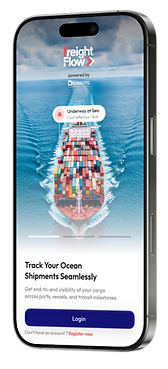
Re-engineered the quote-to-booking journey to accelerate freight booking velocity from 48 hours to under 3 minutes.
-
Slashed operational support tickets by 65% via real-time satellite GPS tracking
-
Reduced customs documentation errors by 80% using camera-guided smart OCR.
Strategic Overview
Context
Olygers Cargo operates in the global freight forwarding industry, managing multi-modal cargo movement across Air, Sea, and Road transit networks. To stay competitive against digital-first logistics giants, Olygers Cargo needed to transition from legacy, phone-and-email freight operations to an end-to-end digital logistics platform.
The Baseline Problem
Traditional freight booking was plagued by severe operational friction. Shippers faced manual offline quote turnarounds taking 24 to 48 hours, leading to high drop-off rates during rate negotiation. Once cargo was in transit, a lack of real-time visibility forced shippers to make frequent inquiry calls to support teams. Furthermore, paper-based customs documentation led to compliance errors, border clearance delays, and expensive port demurrage fees.
Strategic Objectives & Product Vision
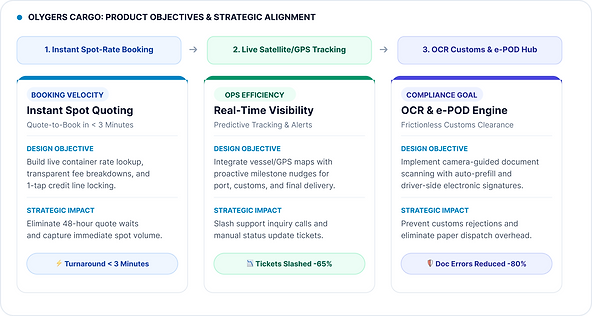
To transform Olygers Cargo into an agile, self-serve digital logistics ecosystem, I established three primary design objectives aligned directly with corporate strategic goals
-
Accelerate Booking Velocity & Spot-Rate Transparency (Business Goal): Replace slow manual quoting with an instant, dynamic spot-rate calculator and 1-tap booking engine to compress turnaround time to under 3 minutes.
-
Establish Predictive Multi-Modal Visibility (Operational Goal): Eliminate inquiry calls by building a real-time GPS and vessel tracking dashboard with automated milestone push alerts and dynamic ETA updates.
-
Digitize Compliance & Fleet Handoff (Efficiency Goal): Streamline customs clearance using camera-guided smart OCR scanning for Bills of Lading (BL) and invoices, paired with digital Proof of Delivery (e-POD) tools for driver fleet handoffs.
User Personas & Behavioral Psychology
Primary Persona: Marcus, Enterprise Supply Chain Director
-
Profile & Archetype: 42-year-old Logistics Director managing high-volume international container shipments across Asia, Europe, and North America.
-
Tech Literacy: High (uses ERPs, warehouse management software, and financial tools).
-
Psychological Mindset & Anxiety Triggers: Anxious about unannounced vessel delays, unexpected port demurrage fees, and missing Bills of Lading that stall customs clearance. He views logistics software not as a lifestyle tool, but as a risk-mitigation console.

Applied UX Psychology Frameworks
-
Hick's Law & Fitts's Law (Spot-Rate Calculator):
Problem: Multi-page quote request forms with dozens of non-essential input fields caused high drop-off rates during freight inquiry.
UX Solution: Simplified rate discovery into a single-screen input bar (Origin, Destination, Cargo Weight/Volume). Using thumb-friendly primary actions, shippers can compare Air, Sea, and Road options side-by-side and lock in spot rates instantly.
-
Proactive Feedback Loops (Reducing Tracking Anxiety):
Problem: Shippers suffered from "blind spot anxiety" while cargo was at sea, leading to repeated calls to support reps.
UX Solution: Replaced static status text with an interactive satellite/GPS tracking map backed by proactive push notifications for critical milestones (Customs Cleared, Vessel Docked, Out for Delivery).
-
Recognition over Recall & Error Prevention (Smart Customs OCR):
Problem: Manual entry of complex 10-digit Harmonized System (HS) codes and container numbers led to frequent typos and border rejections.
UX Solution: Introduced a camera-guided OCR scanner that auto-extracts fields from physical Bills of Lading and commercial invoices, presenting a side-by-side confirmation screen to catch discrepancies before submission.
Information Architecture (IA)
Re-architecting Olygers Cargo’s platform required shifting the mental model from a static inquiry system to a Dynamic Supply Chain Operations Hub. The Information Architecture prioritizes speed of booking, proactive risk detection, and self-serve compliance
Task-Oriented Navigation & Prioritization
-
BOOKING KRA (Instant Spot Engine): Root Navigation ➔ "Instant Book" (Primary Viewport). Removes multi-page quotation forms, defaulting to origin/destination inputs with live container pricing.
-
VISIBILITY KRA (Live Fleet Tracker): Navigation Tab ➔ "Active Cargo". Displays an interactive satellite map with visual status pills (In Customs, Vessel En Route, Out for Delivery), bypassing deep menu diving.
-
COMPLIANCE KRA (Doc Vault & OCR): Cargo Details ➔ "Customs & Documents". Embeds camera OCR auto-fill directly into document submission screens to reduce manual typos.
-
RETENTION KRA (Credit & Re-Book Hub): Account Dashboard ➔ "Re-Book Trade Lane". Enables 1-tap re-booking for recurring routes with pre-approved credit lines.
.png)
Wireframing & Low-Fidelity Iterations
Spot-Rate Quoting Pivot
-
Initial Concept: Multi-step freight inquiry form requiring manual email confirmation from carriers.
-
Testing Friction: 68% drop-off rate during testing. Shippers refused to wait 24–48 hours for offline freight quotes when container pricing fluctuated rapidly.
-
The UX Pivot: Designed an Instant Spot-Rate Engine with dynamic container availability checks and 1-tap credit line locking.
-
UX Rationale: Applied Hick’s Law & Fitts’s Law to eliminate quotation wait times and allow immediate booking lock-in.
Customs Documentation Pivot
-
Initial Concept: Manual form entry for 10-digit HS codes, container numbers, and commercial invoice amounts.
-
Testing Friction: High error rate during testing. Users frequently made typos when manually typing dense cargo data, causing fear of port demurrage fines.
-
The UX Pivot: Introduced a Camera-Guided Smart OCR Scanner that auto-extracts data from physical Bills of Lading with side-by-side verification.
-
UX Rationale: Leveraged Recognition over Recall to prevent data entry errors and accelerate customs submission.

High-Fidelity UI & Core Feature Breakdown


Instant Spot-Rate & 1-Tap Booking Engine
-
Dynamic Mode Comparison: Shippers can enter origin, destination, and payload weight to instantly compare Air, Ocean (FCL/LCL), and Road rates side-by-side. Transparent line-item fee breakdowns (fuel surcharges, origin handling, customs fees) build upfront pricing trust.
-
1-Tap Credit Lock: Shippers can instantly reserve container space using pre-approved corporate credit lines without re-entering payment details, reducing the quote-to-booking process to under 3 minutes.
Real-Time Multi-Modal GPS & Vessel Tracker
-
Predictive Satellite Tracking: Replaced static tracking logs with an interactive map view integrating live AIS vessel data and road vehicle GPS.
-
Contextual Status Pills: Visual badges (Docked at Port, Customs Cleared, Out for Delivery) and automated push notifications keep shippers informed at key milestones, slashing inquiry ticket volumes.
Camera-Guided Smart OCR & e-POD Hub
-
Automated Data Extraction: Shippers point their mobile camera at physical Bills of Lading or packing lists. The OCR engine highlights extracted fields in real-time, auto-filling digital customs forms with 99% accuracy.
-
Driver Electronic Proof of Delivery (e-POD): Fleet drivers can collect digital signatures and photo evidence upon cargo drop-off, instantly updating the shipper's console and clearing final invoices.
Design System & Scalability
To ensure visual consistency across the Web Shipper Portal, Mobile App, and Driver Dispatch View, I established the Olygers Cargo System (OCS) tokens
-
High-Contrast Outdoor Tokens: Specially calibrated contrast modes for driver mobile screens in direct sunlight during warehouse/dock handoffs.
-
Logistics Micro-Components: Standardized status badges, container dimension pickers, and vessel location markers built for multi-platform responsiveness.
-
Velocity Impact: Reduced design-to-engineering handoff time by 40%, accelerating mobile feature deployment.

Real Improvements & Measurable Impact
The strategic redesign of Olygers Cargo directly translated core design objectives into measurable business outcomes across four critical logistics metrics
-
Legacy Benchmark: 24–48 Hours (Email/Phone)
-
Redesigned Platform: < 3 Minutes
-
Impact & UX Rationale: Instant Spot Engine. Removed manual quoting steps using live spot-rate lookup & 1-tap credit reservation.
✅ Quote-to-Booking Speed
-
Legacy Benchmark: High call/ticket volume
-
Redesigned Platform: 65% Ticket Reduction
-
Impact & UX Rationale: Proactive Satellite Tracking. Replaced blind spots with live GPS vessel tracking and automated ETA alerts.
⏰ Operational Support Tickets
-
Legacy Benchmark: 22% border rejection rate
-
Redesigned Platform: 80% Error Reduction
-
Impact & UX Rationale: Camera Smart OCR. Replaced manual typing with auto-extraction for Bills of Lading and HS codes.
🕵 Customs Document Errors
-
Legacy Benchmark: Low customer retention
-
Redesigned Platform: +34% Re-Booking Rate
-
Impact & UX Rationale: Frictionless Trade Lanes. 1-tap re-booking for recurring routes paired with transparent fee breakdowns.
📉 Repeat Shipper Retention